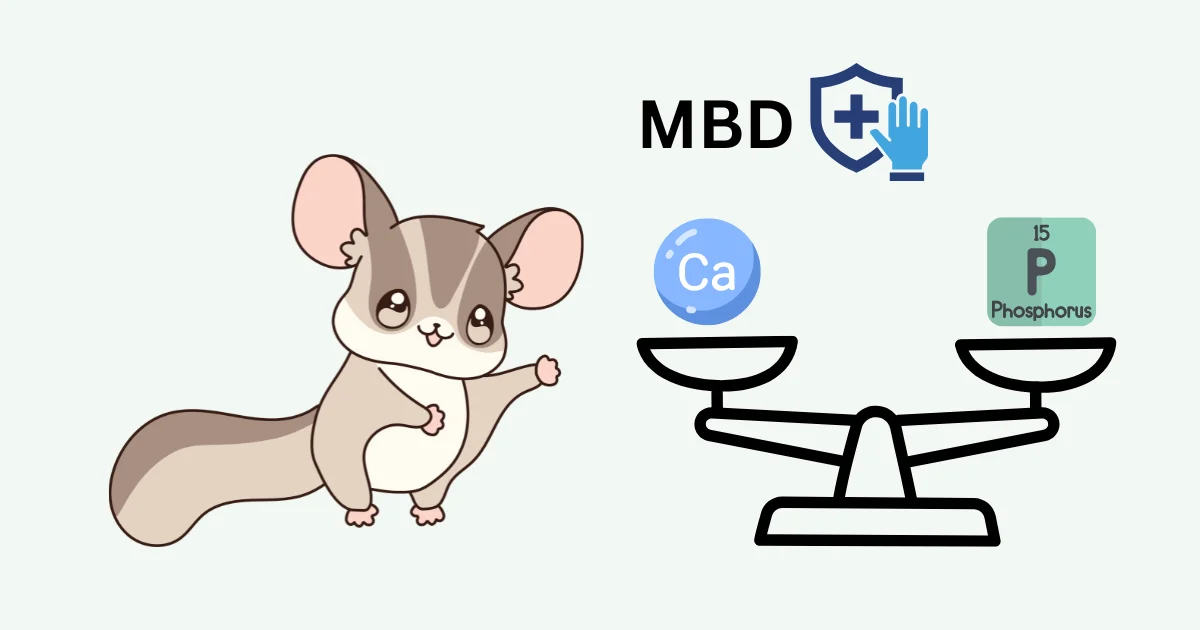
The calcium-to-phosphorus (Ca:P) ratio is the most important number in your sugar glider's diet. Get it right and you prevent the single most common serious illness in captive gliders. Get it wrong and you risk metabolic bone disease within months.
The short answer: aim for a dietary Ca:P ratio between 1:1 and 2:1, calcium first. Below 1:1 is dangerous.
Key Takeaways
- Target a dietary Ca:P ratio between 1:1 and 2:1, calcium first — below 1:1 is dangerous.
- A phosphorus-heavy diet pulls calcium from the bones and causes metabolic bone disease (MBD).
- A perfect ratio still fails without vitamin D3, and high-oxalate greens block calcium regardless (NC State).
- Don't memorize food charts — build the plate and check the number with the Ca:P calculator.
What the ratio actually measures
Calcium and phosphorus are both essential minerals, but they compete for absorption in the gut. Diet isn't about calcium or phosphorus in isolation — it's about their ratio.
When a meal contains far more phosphorus than calcium, the body can't absorb enough calcium from food. To keep blood calcium stable, it leaches calcium out of the skeleton. Do that meal after meal and bones weaken.
Why a bad ratio causes MBD
Metabolic bone disease (MBD) is the clinical result of chronic calcium deficiency. In sugar gliders it typically shows as:
- Hind-leg weakness or partial paralysis
- Bones that fracture from ordinary activity
- Lethargy, tremors, and muscle wasting
By the time symptoms appear, damage is advanced. That's why prevention through the ratio beats treatment.
The target range
| Ratio | Zone | What to do |
|---|---|---|
| Below 1:1 | Dangerous | Avoid; high MBD risk |
| 1:1 to 2:1 | Acceptable | Fine; lean toward the top |
| 2:1 to 3:1 | Ideal | Target this band |
| Above 3:1 | High | Usually safe; watch supplementation |
Notice that erring high on calcium is far safer than erring low.
Two things the ratio alone won't tell you
Vitamin D3. Without adequate D3, the gut can't absorb calcium regardless of a perfect ratio. Ensure a D3 source in the diet or provide supervised UVB exposure.
Oxalates. High-oxalate greens — spinach, beet greens, Swiss chard — bind calcium in the gut and make it unavailable (NC State Veterinary Hospital) even when the ratio looks ideal on paper. Favor low-oxalate, calcium-rich greens like collard greens instead.
How to check your glider's plate in seconds
You do not need to memorize the calcium and phosphorus content of every food. Build the meal and let the math run:
Use our free Ca:P Ratio Calculator — add each food to the plate and it returns the combined ratio instantly, colour-coded against the ranges above. GliderCare's diet log applies the same guardrail automatically to every feeding you record, so you get a warning before a phosphorus-heavy plate becomes a pattern.
A note on supplements
A quality calcium/D3 supplement is standard in most sugar glider diets to lift the ratio into the safe band — gliders otherwise favour phosphorus-heavy sweet foods over balanced ones (VCA Animal Hospitals). A well-reviewed option owners commonly use is available through pet retailers — calcium supplements for sugar gliders — but treat any supplement as a tool to hit the ratio target, not a substitute for a balanced base diet. Always confirm dosing with an exotics vet.
Frequently Asked Questions
What is a good Ca:P ratio for sugar gliders?
Aim for a dietary calcium-to-phosphorus ratio between 1:1 and 2:1, calcium first, and treat anything below 1:1 as dangerous. Erring high on calcium is far safer than erring low, so lean toward the top of the band rather than the bottom.
What happens if a sugar glider's Ca:P ratio is too low?
When phosphorus dominates, the body can't absorb enough dietary calcium and leaches it from the skeleton to keep blood calcium stable. Repeated meal after meal, this causes metabolic bone disease — hind-leg weakness, fractures from ordinary activity, tremors, and muscle wasting.
Do oxalates affect a sugar glider's calcium?
Yes. High-oxalate greens such as spinach, beet greens, and Swiss chard bind calcium in the gut and block its absorption (NC State Veterinary Hospital), so the ratio can look ideal on paper yet still leave your glider calcium-deficient. Favor low-oxalate, calcium-rich greens like collard greens.
Does my sugar glider need a calcium supplement?
Usually yes. A quality calcium/D3 supplement is standard in most sugar glider diets to lift the ratio into the safe band, because gliders preferentially eat phosphorus-heavy sweet foods (VCA Animal Hospitals). Treat it as a tool to hit the target, not a substitute for a balanced base diet, and confirm dosing with an exotics vet.
Where to go next
- Sugar Glider Diet: The Complete Guide — the full feeding plan.
- Sugar Glider Weight Tracking — spot problems before symptoms.
Sources
- VCA Animal Hospitals, "Sugar Gliders — Feeding," retrieved 2026-07-18, https://vcahospitals.com/know-your-pet/sugar-gliders-feeding
- NC State Veterinary Hospital, "Caring for Your Pet Sugar Glider," retrieved 2026-07-18, https://hospital.cvm.ncsu.edu/services/small-animals/nutrition/caring-for-your-pet-sugar-glider/
This article is general husbandry guidance, not veterinary advice. For any medical concern, consult an exotic-animal veterinarian.
Track your glider’s diet, weight & bonding
GliderCare turns the guidance in this article into daily practice — Ca:P safety guardrails, weight trend alerts, and a bonding journal, free for your first glider.